Best Rosemary Hair Oil for Dandruff by Formula
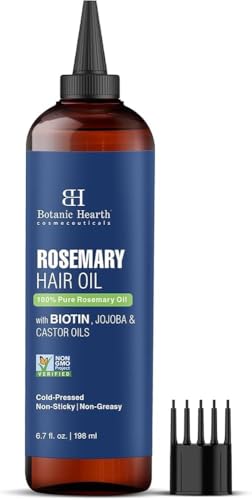
Six rosemary oils compared for flaky scalps: Botanic Hearth's 6.7 fl oz cold-pressed blend wins, with a leave-in spray and a pure essential oil as strong alternates.

By Glen TaylorUpdated 16 min read
On this page
- Best rosemary hair oil for dandruff at a glance
- How I cut a longer list down to six
- Blend or pure essential oil: which suits a flaky scalp?
- Why bottle size decides cost per use, not sticker price
- 1. Botanic Hearth Rosemary Oil for Hair Growth — Best overall
- 2. KUKKA 100% Pure Rosemary Essential Oil — Runner-up
- 3. PHARM TO TABLE Leave In Conditioner Spray — Best for pros
- 4. Mielle Organics Rosemary Mint Hair Oil with Biotin — Best minimal setup
- 5. Shea Moisture Strengthening Scalp & Hair Oil — Best budget pick
- 6. VITAL AFFAIR Rosemary, Castor & Batana Blend — Best premium
- How to actually apply rosemary oil to a flaking scalp
- What the listings do not tell you about dandruff
- Which pick fits which routine?
- The verdict
- FAQ
The best rosemary hair oil for dandruff in this set is Botanic Hearth Rosemary Oil for Hair Growth, a 6.7 fl oz cold-pressed blend that stacks rosemary with biotin, jojoba and castor and that the brand markets specifically for soothing a flaky, inflamed scalp. The deciding specification here is not the rosemary itself. It is what surrounds it. Most flaking is dryness, and a bottle that pairs rosemary with a proper carrier oil does more real work than a purer, hotter formula. If you would rather mix your own dilution, the undiluted KUKKA 100% Pure Rosemary Essential Oil in 4 fl oz is the better buy.
Best rosemary hair oil for dandruff at a glance
| Pick | Size | Format | Price |
|---|---|---|---|
Best overall Botanic Hearth Rosemary Oil for Hair Growth |
6.7 fl oz | Cold-pressed blend rosemary + biotin + jojoba + castor |
Check Price |
| 4 fl oz | Undiluted essential oil steam-distilled |
Check Price | |
Best for pros PHARM TO TABLE Leave In Conditioner Spray |
8 fl oz | Rosemary + mint spray tea tree added |
Check Price |
Best minimal setup Mielle Organics Rosemary Mint Hair Oil |
2 fl oz | Rosemary + biotin blend | Check Price |
Best budget pick Shea Moisture Rosemary & Collagen Scalp Oil |
2 fl oz | Rosemary + vegan collagen blend | Check Price |
Best premium VITAL AFFAIR Rosemary, Castor & Batana Blend |
6 fl oz | Rosemary + castor + batana + jojoba | Check Price |



How I cut a longer list down to six
I started with the rosemary hair oils Amazon actually returns for a dandruff query and worked through the listings in a spreadsheet. The search modifier here is only partially supported: Amazon treats "dandruff" as loose intent, so not every result carries an on-listing dandruff claim. I lined up the published specifications side by side rather than trusting the marketing copy.
Three disqualifications did most of the cutting.
- No published size in fluid ounces. If the bottle format is unclear, cost per use is unknowable and I dropped the listing.
- Rosemary as a background note. Several oils listed rosemary fifth or sixth in a long stack of botanicals. Those were cut because the buyer here came for rosemary, not for a general hair oil.
- Overlapping formats. Where two listings covered the same territory, I kept the one with more concrete specifications.
What survived is a set that spans four honest options for a flaking scalp: a nourishing cold-pressed blend, an undiluted essential oil for DIY, a leave-in spray, and a small-format starter. Two more sit alongside them as a budget entry and a premium stack. Every pick was checked against specs[] for size, weight and dimensions, and against the feature bullets for what the brand itself claims about scalp use. Anything the listing does not state, I do not state either.
Blend or pure essential oil: which suits a flaky scalp?
This is the fork most buyers get wrong. A "stronger" rosemary oil is not a better rosemary oil for dandruff.
Rosemary essential oil is potent, and applied neat it can irritate a scalp that is already inflamed. Pure essential oils, like the KUKKA 4 fl oz bottle, are meant to be diluted into a carrier such as jojoba, coconut or grapeseed before they touch the scalp. The KUKKA listing itself specifies 2 to 3 drops per tablespoon of carrier oil, or 3 to 5 drops added to shampoo. That is a mixing job, not a ready-to-use scalp oil.
Pre-blended oils, by contrast, arrive at scalp-safe strength. Botanic Hearth's 6.7 fl oz bottle combines rosemary with jojoba, castor and biotin, and the brand markets it for soothing a dry, flaking scalp directly. Mielle's 2 fl oz Rosemary Mint pairs rosemary with biotin and, per Mielle, is designed as a scalp oil or pre-wash treatment out of the bottle. VITAL AFFAIR stacks castor and batana with the rosemary.
Choose a blend if you want to unscrew the cap and use it. Choose the pure essential oil if you already own a carrier and want to control the dose.
Why bottle size decides cost per use, not sticker price
The bottles in this set run from 2 fl oz to 8 fl oz. That is a four-fold spread in volume before any price discussion. Cost per use, not sticker price, is what matters when you are treating a scalp two or three times a week.
Look at the spread. Botanic Hearth ships 6.7 fl oz. VITAL AFFAIR ships 6 fl oz. KUKKA ships 4 fl oz of undiluted essential oil that stretches much further because you dose it in drops. PHARM TO TABLE ships 8 fl oz of leave-in spray. Mielle and Shea Moisture ship 2 fl oz each, which is a starter format.
- A 2 fl oz bottle used twice a week is a short-run product. It answers "does this work for me" better than "how do I keep flakes down for the next six months".
- A 6 fl oz to 8 fl oz bottle is a routine bottle. It lasts long enough that you actually see whether flaking settles.
- An undiluted essential oil is measured differently again, because a 4 fl oz bottle at 3 drops per application is many months of use.
The cheapest sticker in the set is Shea Moisture at 2 fl oz. The cheapest per use is likely KUKKA at 4 fl oz of undiluted oil, once you factor in the carrier you already own. That is the trick with rosemary oil: format changes the arithmetic more than brand does.
1. Botanic Hearth Rosemary Oil for Hair Growth — Best overall
A 6.7 fl oz cold-pressed rosemary blend that combines the scalp-soothing claim with enough volume for a real routine.
Best for: a dry, flaking scalp that wants a nourishing blend, not neat essential oil Skip it if: you want undiluted rosemary you can dose yourself
Botanic Hearth wins because it does the thing a dandruff-focused buyer actually needs: it arrives at scalp-safe strength in a bottle big enough to run a routine on. The listing specifies 6.7 fl oz, roughly triple the volume of the Mielle and Shea Moisture starters. Weight comes in at 6.98 oz, which lines up with a 6.7 fl oz oil-heavy formula.
Botanic Hearth says the blend pairs cold-pressed rosemary with jojoba, castor and biotin, and specifically markets it for reducing dryness and inflammation on the scalp. The brand also states it is paraben-free, sulfate-free and cruelty-free. Those are claims from the listing, not measured tests, but they are the claims a scalp-first buyer wants to see.
The trade-off is price position: this is one of the more expensive bottles in the set, and only two sellers list it. If you want a simple starter to try the ingredient once, Mielle is the smaller commitment.
Pros:
- 6.7 fl oz, one of the two largest bottles here
- Cold-pressed rosemary paired with jojoba, castor and biotin
- Brand claim specifically targets dryness and scalp inflammation
- Paraben-free, sulfate-free, cruelty-free per the listing
- Ready to use without a separate carrier oil
Cons:
- Sits at the premium end of this set
- Only two sellers list it
- No published dimensions or model number
- Category listed under relaxers, not treatment oils
2. KUKKA 100% Pure Rosemary Essential Oil — Runner-up
A 4 fl oz undiluted essential oil for anyone who prefers to blend their own carrier and dose.

Best for: DIY mixers who prefer to control the carrier oil and strength Skip it if: you want a ready-to-use scalp treatment out of the bottle
KUKKA is the runner-up because it does the opposite of Botanic Hearth, and does it cleanly. The listing states the bottle contains 100% Rosmarinus officinalis leaf oil, steam-distilled, with no carrier oils. That is the format DIY scalp routines are built on. KUKKA gives explicit dosing on the listing: 2 to 3 drops per tablespoon of jojoba, coconut, argan or grapeseed for scalp massage, 2 to 3 times weekly, or 3 to 5 drops mixed directly into shampoo.
The dimensions come in at 5.59 x 1.89 x 1.89 in, which is a standard essential oil bottle you can travel with. The listing notes packaging can arrive in an old or new design at random, both with the same oil.
The obvious weakness for a dandruff-focused reader is that this is not scalp-ready. Applied neat, it is too strong and can worsen irritation. Only choose it if you already have a carrier oil at home or are happy to buy one.
Pros:
- 100% pure rosemary, no fillers or carrier
- Explicit dilution and dosing on the listing
- 4 fl oz stretches for months at drop-level use
- Steam-distilled, single ingredient
- Category-listed under Essential Oil Singles
Cons:
- Must be diluted, never applied neat to skin
- Requires a separate carrier oil to work as scalp treatment
- Packaging arrives in one of two versions at random
- Strong camphor-herbaceous scent per the listing
3. PHARM TO TABLE Leave In Conditioner Spray — Best for pros
A rosemary and mint scalp spray at 8 fl oz, the largest bottle in this set and the only non-oil format.

Best for: textured-hair routines that need a leave-in spray, not a heavy oil Skip it if: you want a traditional oil you can massage in with fingertips
This is the pick for anyone whose real complaint is that heavy oils do not work with their styling routine. PHARM TO TABLE is the only spray format here and the only bottle at a full 8 fl oz. The weight matches at 8 oz.
The brand describes it as a leave-in scalp treatment with rosemary, mint and tea tree oil, and specifically markets it for a dry, flaky, itchy scalp. Because it is a spray, application is different: you part the hair, mist the scalp, massage in and leave. The listing calls the formula lightweight and non-greasy, and pitches it as a same-day treatment rather than a pre-wash.
Where it loses ground against Botanic Hearth is composition. A leave-in spray is diluted by design, so the rosemary is one ingredient in a lighter, water-forward formula rather than a concentrated carrier blend. If you like the ritual of scalp massage with an actual oil, this will feel too thin.
Pros:
- 8 fl oz, the largest bottle in this set
- Spray format applies cleanly on styled hair
- Rosemary, mint and tea tree stacked for scalp care
- Non-greasy per the listing, no rinse required
- Explicitly marketed as a dandruff and itch treatment
Cons:
- Not an oil; texture will disappoint oil-routine fans
- Rosemary is one active among several
- No published dimensions
- Slower seller in this set
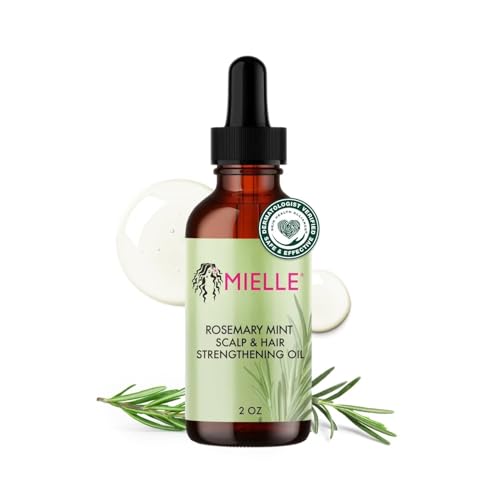
4. Mielle Organics Rosemary Mint Hair Oil with Biotin — Best minimal setup
A 2 fl oz rosemary and biotin oil that is the shortest commitment for testing the ingredient.
Best for: someone starting a scalp routine and testing rosemary for the first time Skip it if: you already burn through 2 fl oz bottles in a month
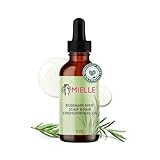
Mielle is the minimal-setup pick because it removes almost every barrier to trying rosemary oil for a flaky scalp. The bottle is 2 fl oz, dimensions 4.6 x 1.5 x 1.5 in, and it weighs 3.99 oz filled. That is a size that fits in a wash-day caddy without argument.
The Mielle listing describes the formula as suitable for all hair types and textures, with rosemary oil and biotin as the pitched actives. The brand recommends it as a scalp oil, pre-wash oil, or split-end treatment, applied to scalp or ends and left in for 10 minutes under a cap for a deeper soak, or rinsed. The model is 30679, and the product was released in 2020, which makes this the most established formula in the set.
The trade-off is volume. Two fluid ounces disappears fast on a regular scalp routine, and you will be reordering before you know whether the ingredient is truly settling your flaking. It answers "do I like this" better than "can I run six months on it".
Pros:
- 2 fl oz is a low-commitment starter size
- Rosemary paired with biotin per the listing
- Suitable for all hair types per Mielle
- Established formula, released in 2020
- Sells faster than most of this set
Cons:
- Small bottle runs out quickly on regular use
- No listed warranty or return specifics
- Rosemary is not the sole active
- Category is treatment oil, not medicated scalp care
5. Shea Moisture Strengthening Scalp & Hair Oil — Best budget pick
A 2 fl oz rosemary and vegan collagen scalp oil at the lowest price position in this set.

Best for: keeping a hydrating scalp oil in the drawer without a big outlay Skip it if: you want a large-format bottle to last several months
Shea Moisture takes the budget slot as the cheapest of the six by price position. The bottle is 2 fl oz, 2.06 oz filled, with dimensions of 1.5 x 4.7 x 1.5 in. It was released in 2024, making it the newest formula here.
The brand markets the oil around what it calls ScalpBoost Technology, combining vegan collagen, water mint and rosemary leaf oil. The Shea Moisture listing focuses on protecting the scalp barrier and locking in hydration, and pitches strengthening strands to reduce breakage. The dandruff angle is implied through the hydration and scalp-barrier language rather than stated directly.
Where this pick weakens is the same weakness as Mielle: 2 fl oz is a starter size. It is a good drawer bottle to keep alongside a shampoo routine, but on its own it will not carry six months of scalp care. The rosemary here is also one of several actives, not the star.
Pros:
- Cheapest of the six by price position
- Rosemary paired with vegan collagen and water mint
- Released in 2024, newest formula in the set
- Fair Trade shea butter per the brand
- Compact enough for travel
Cons:
- 2 fl oz runs out quickly on frequent use
- Rosemary is a secondary ingredient
- Slowest seller in this set
- Dandruff claim is implied, not stated
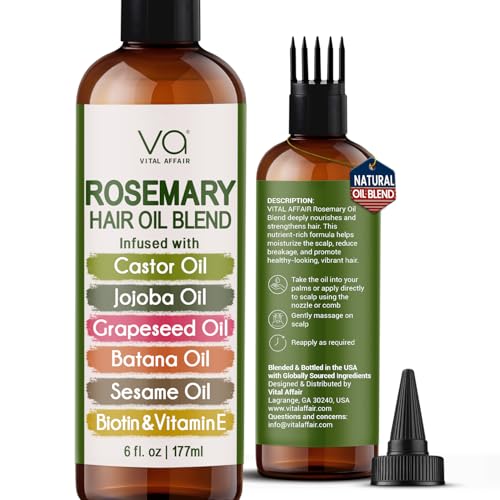
6. VITAL AFFAIR Rosemary, Castor & Batana Blend — Best premium
A 6 fl oz blend stacking rosemary with castor, batana, jojoba, grapeseed, biotin and vitamin E.
Best for: shoppers who want batana and castor stacked into one bottle Skip it if: you are only chasing the rosemary itself
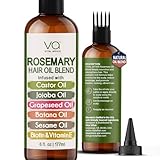
VITAL AFFAIR is the premium pick because it stacks the most talked-about scalp ingredients into a single bottle: rosemary, castor, batana, jojoba, grapeseed, biotin and vitamin E per the listing. The bottle is 6 fl oz, dimensions 6 x 1.75 x 1.75 in, colour light yellow.
The brand claims the blend reduces dandruff and soothes scalp irritation, alongside the more general growth-and-thickening pitch. It is positioned as multi-purpose, usable as a scalp treatment, leave-in conditioner or nourishing hair oil. Only two sellers list it, and it is the most expensive of the six.
The honest weakness here is straightforward. If your reason for buying is rosemary specifically, you are paying premium prices for six other ingredients you may not need. The Botanic Hearth blend covers the same ground with a tighter ingredient list and a slightly larger bottle. Choose VITAL AFFAIR when you want the batana in particular, or when the whole stack appeals to you.
Pros:
- 6 fl oz ready-to-use blend
- Batana, castor and jojoba stacked with rosemary
- Biotin and vitamin E per the listing
- Explicit dandruff and scalp irritation claim
- Multi-purpose use per the brand
Cons:
- Highest price position in this set
- Slower seller than most of the picks here
- Rosemary is one of many ingredients
- No listed model number or release date
How to actually apply rosemary oil to a flaking scalp
Application matters more than most buyers realise. A good rosemary oil badly used does very little.
- Start on dry hair, before shampooing. Part the hair in sections. Apply the oil directly to the scalp, not the lengths.
- Massage for two to three minutes per section. Fingertips, not nails. The point is to lift oil into the follicles, not to scratch.
- Leave it in. Botanic Hearth's blend is a leave-in. Mielle recommends 10 minutes under a cap for a deeper soak. KUKKA's essential oil, once diluted with a carrier, can sit on the scalp for the same window.
- Wash with a gentle shampoo. Sulfate-heavy shampoos can strip an already dry scalp, undoing what the oil was doing.
- Repeat two to three times a week. KUKKA's listing suggests this cadence explicitly.
Two application errors do the most damage. First, applying neat essential oil directly to the scalp: this is what the KUKKA listing warns against by specifying dilution. Second, only applying to the lengths. If flaking is the complaint, the scalp is where the product goes.
What the listings do not tell you about dandruff
The best rosemary hair oil for dandruff in this set is treating dryness, inflammation and a compromised scalp barrier. That is what the brand claims describe. What none of these listings do is diagnose your specific flaking.
Dandruff has several causes. Simple dryness responds well to a rosemary oil blend with a nourishing carrier. Seborrheic dermatitis, which involves a specific yeast, and scalp psoriasis are medical conditions that a botanical scalp oil may soothe but will not cure. PHARM TO TABLE mentions both by name in its listing bullets, but the language is descriptive, not medical.
If your flaking is greasy, yellow and localised around the hairline or eyebrows, or if it comes with red patches or thick silvery scale, an oil is not the whole answer. A dermatologist visit is. Rosemary oil sits alongside medicated shampoos, not instead of them.
Which pick fits which routine?
- Wash-day scalp oil, ready to use. Botanic Hearth. Big bottle, sensible blend, straight from bottle to scalp.
- DIY mixer with a carrier oil at home. KUKKA. Undiluted rosemary, dosed in drops.
- Styled hair, no time for a pre-wash oil. PHARM TO TABLE spray. Mists on, no rinse.
- First-time rosemary trial. Mielle. Two fluid ounces is a low-commitment test.
- Cheapest drawer bottle. Shea Moisture. Newest formula, lowest price position.
- Ingredient stack over rosemary purity. VITAL AFFAIR. Batana and castor loaded in.
The verdict
Botanic Hearth Rosemary Oil for Hair Growth is the pick for most flaky-scalp buyers. Its 6.7 fl oz size gives you enough oil to run a real two-or-three-times-a-week routine, and the cold-pressed blend of rosemary, biotin, jojoba and castor arrives scalp-safe with no mixing needed. The brand's listing calls out dandruff, dryness and inflammation directly, which matches the reason most buyers land on this page.
Two conditions flip the recommendation.
If you already own a carrier oil and prefer to dose yourself, KUKKA 100% Pure Rosemary Essential Oil is the sharper buy. Four fluid ounces of undiluted rosemary, applied at 2 to 3 drops per tablespoon of jojoba or grapeseed, stretches for months. It also gives you a rosemary you can add straight into shampoo at 3 to 5 drops.
If your hair is styled and you will not sit through a pre-wash oil, PHARM TO TABLE Leave In Conditioner Spray is the honest pick. Eight fluid ounces of a rosemary-mint spray with tea tree, misted onto a parted scalp, is a very different ritual to an oil massage. That is what makes it worth the swap.
The cutoff is format. Ready-to-use oil, undiluted essential oil, or leave-in spray: pick the shape that fits your routine, then let the rosemary work.
FAQ
Is rosemary hair oil actually good for dandruff?
Rosemary hair oil is often positioned for dandruff because rosemary is claimed to soothe inflammation and support scalp circulation. Botanic Hearth, VITAL AFFAIR and PHARM TO TABLE all state a dandruff or flaky-scalp benefit on their listings. Those are brand claims, not medical outcomes. A rosemary oil blend can help dryness-driven flaking; it will not resolve seborrheic dermatitis or psoriasis on its own.
How often should I use the best rosemary hair oil for dandruff?
The best rosemary hair oil for dandruff routines land at two to three times a week. KUKKA states that cadence explicitly on its listing for scalp massage. Mielle suggests leaving its blend on for around 10 minutes under a cap before rinsing. Daily use is not required and, with an undiluted essential oil, not advisable. Consistency over eight to twelve weeks matters more than frequency.
Botanic Hearth vs KUKKA: which should I buy?
Botanic Hearth vs KUKKA comes down to format. Botanic Hearth is a 6.7 fl oz ready-to-use blend combining rosemary with jojoba, castor and biotin, scalp-safe out of the bottle. KUKKA is 4 fl oz of undiluted essential oil that must be diluted at 2 to 3 drops per tablespoon of carrier. Choose Botanic Hearth for convenience, KUKKA for control and longer bottle life.
Is a small bottle worth it for treating flaking?
A small bottle is worth it as a test, not as a routine. Mielle and Shea Moisture ship at 2 fl oz, which is enough to try the ingredient for a few weeks and judge whether your scalp responds. For a proper eight-to-twelve-week trial at two applications a week, a larger bottle like Botanic Hearth's 6.7 fl oz or PHARM TO TABLE's 8 fl oz is better value in real use.
Can I put pure rosemary essential oil directly on my scalp?
Pure rosemary essential oil should not go directly on the scalp undiluted. The KUKKA listing is explicit: mix 2 to 3 drops with 1 tablespoon of a carrier oil such as jojoba, coconut, argan or grapeseed, then massage. Neat application can irritate an already inflamed scalp and worsen flaking. Pre-blended oils like Botanic Hearth arrive at scalp-safe strength and skip the mixing step entirely.
Rosemary oil is a slow ingredient. If you are picking up your first bottle for a flaky scalp, start with Botanic Hearth's 6.7 fl oz blend, apply it two to three times a week to the scalp for eight to twelve weeks, and pair it with a gentle sulfate-free shampoo. That gives you a fair test on a bottle big enough to run the trial to the end. If your flaking is greasy, patchy or itchy in a way an oil is not settling, that is a signal to book a dermatologist rather than reach for a stronger rosemary bottle. Botanic Hearth wins here because it fits the way most people actually run a scalp routine, not because it is the loudest bottle on the shelf.